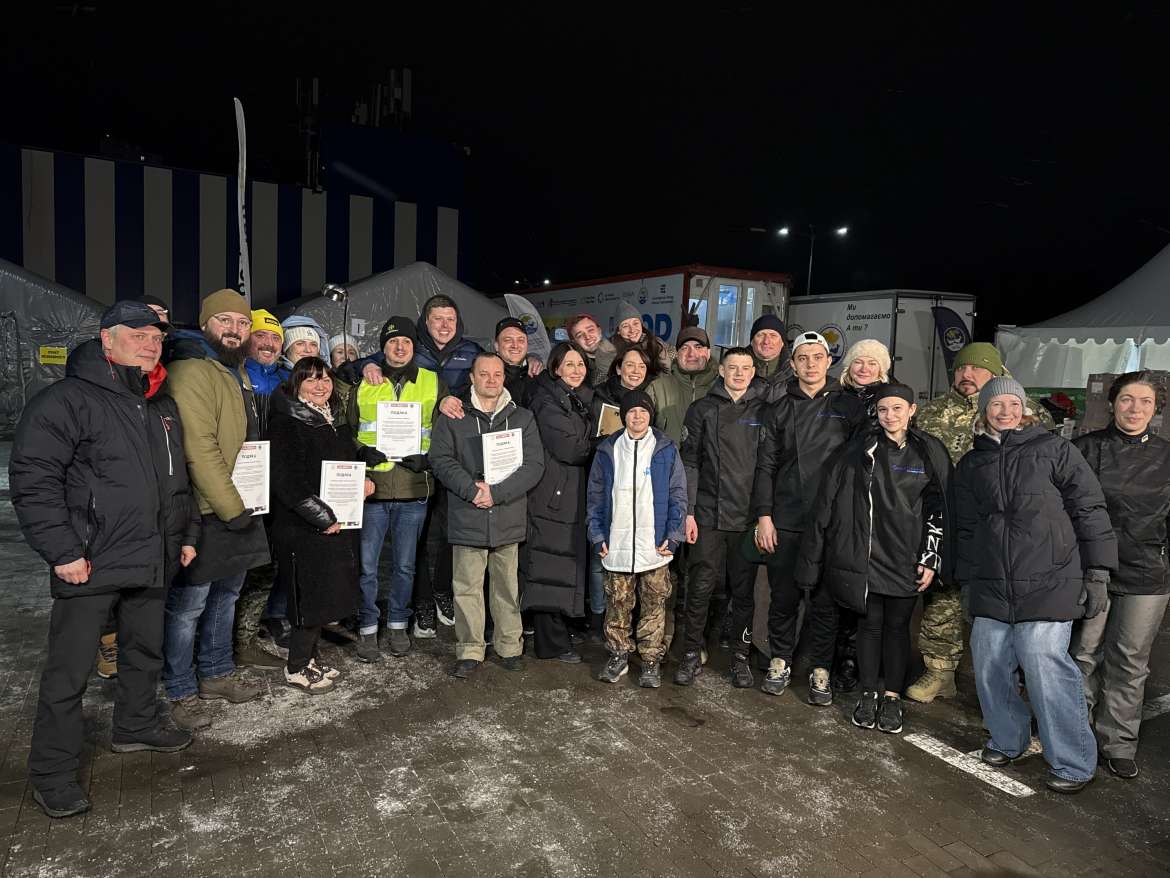
Continuing to support the "FoodTruck: Food Without Borders" humanitarian mission
12/02/2026
January 30 marked one year since the "FoodTruck: Food Without Borders" humanitarian mission was launched in Ukraine. Initiated by the NGO "Iskra Dobra" (Spark of Kindness), the program was supported by Ukrainian businesses, media outlets, and philanthropists, and the Charitable Organization "Charity Fund "Medical Aid Committee in Zakarpattya" joined this important consortium alongside its international partners.
We still remember when the mobile kitchen was nothing more than an idea conceived by chefs and co-founders of the NGO "Iskra Dobra,", Ihor Kukobko and Oleh Bibikov. Drawing on their experience running a humanitarian kitchen in the Kherson region, their rapid response to the food crisis in Chernihiv at the start of the full-scale war, and receiving requests from various regions to provide hot meals to vulnerable populations, the volunteers began turning that dream into reality.
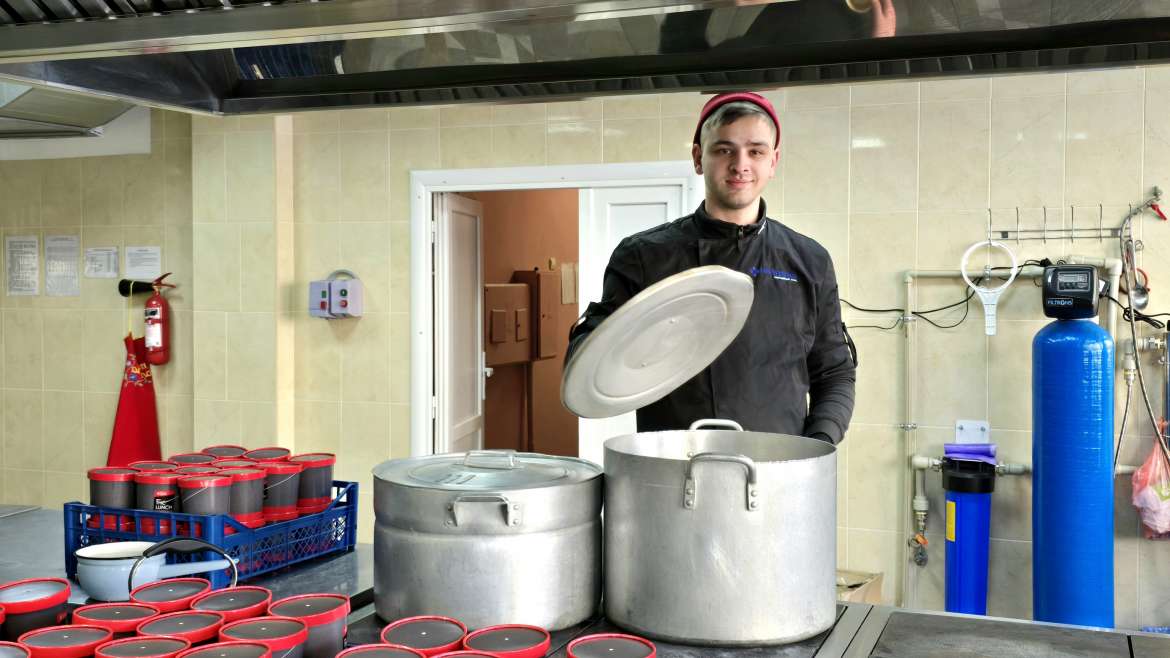
"We started with communities in the Kharkiv region, making our first stop in the Poltava region to help during the liquidation of the consequences of the russian shelling. After Kharkiv Oblast, we went to Sumy. The food truck team immediately saw how effective our work was, because our mission is measured by completely transparent indicators—the volume of ingredients we use to cook thousands of meals daily, and the lines of people who, for various reasons, desperately need food assistance. Our experience includes working with evacuees, shelter residents, and locals who, due to prolonged blackouts, are unable to cook at home. We also always assist military personnel and emergency service workers who counteract enemy attacks and rescue civilians under extreme conditions. A new challenge has emerged in the Kyiv region, where hundreds of thousands of people found themselves without heat, water, or electricity in the bitter cold. Thanks to the support of our partners and the extraordinary efforts of the food truck’s team of chefs, we managed to increase the average number of hot meals served several times over, but even that wasn't enough. So, to work as effectively as possible in the region, we set up a stationary kitchen alongside the mobile one at one of the educational institutions in Troieshchyna. On the very first day, as I was just getting things up and running in the school cafeteria, people were already coming to us—word of mouth spread instantly. For some, that Saturday broth was their first hot meal in several days," says Ihor Kukobko, head of the NGO "Iskra Dobra."
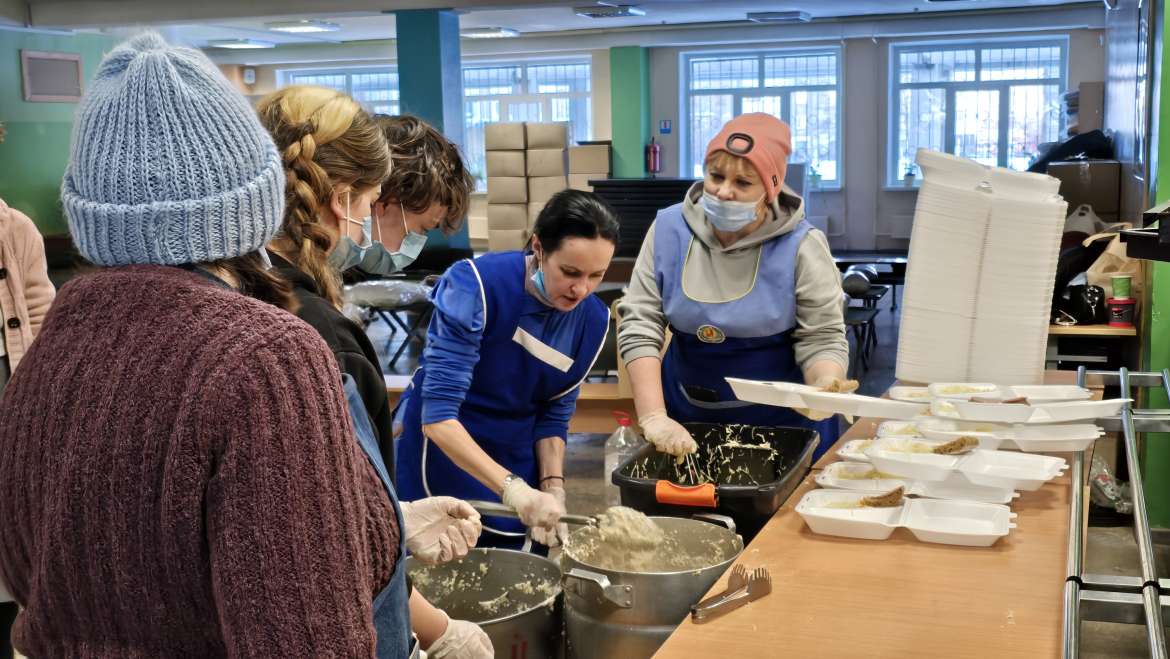
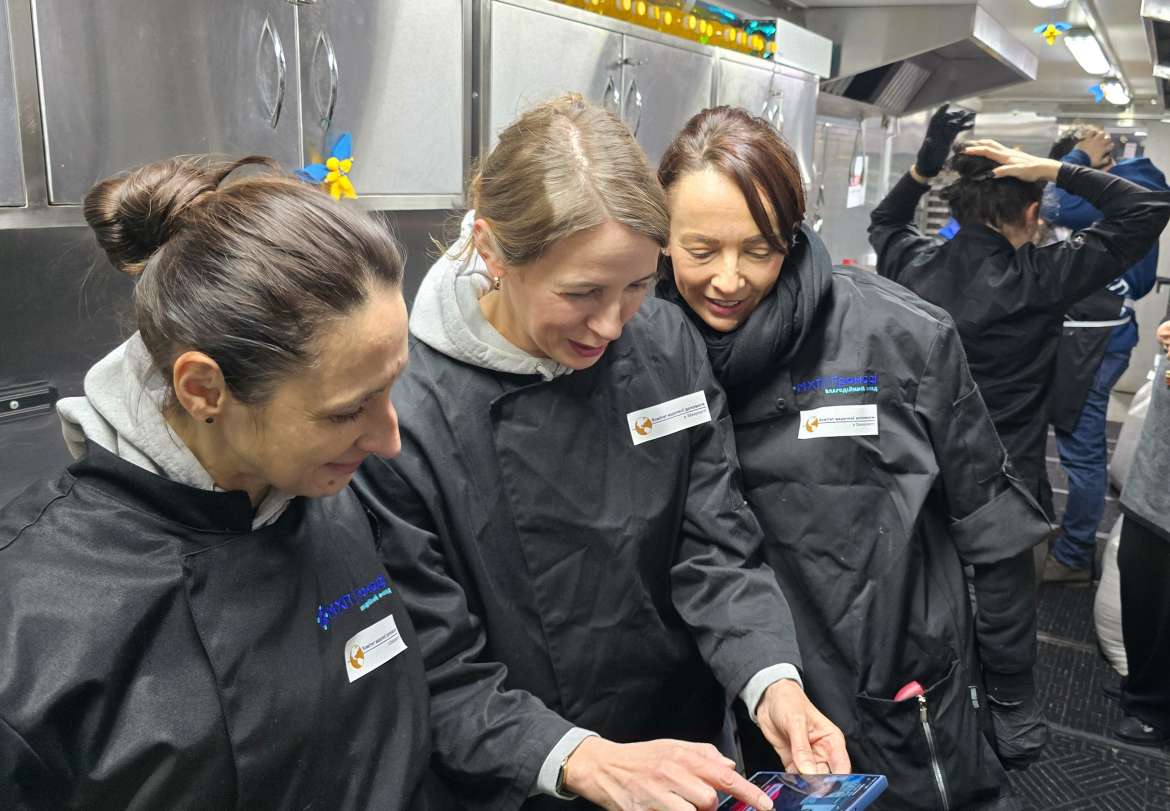
Through constant communication with the mobile kitchen organizers, checking out their social media content, and personal messages, it felt as though we were spending every day together. We always knew what was on the menu that day, how the food truck team was doing, and which needs were prioritized. However, you can only truly understand what it feels like to cook 10,000 to 15,000 meals a day by being there in person. That is why, at the end of January, four staff members from the Medical Aid Committee in Zakarpattya traveled to Brovary (where the food truck is based) to support our partners from the NGO "Iskra Dobra." Over the course of two days, the visitors not only handled organizational matters regarding our cooperation but also assisted the cooks. None of them had ever seen—let alone prepared—such large quantities of soups, borscht, porridges, cutlets, and salads before. What seemed like a grand culinary spectacle to outside eyes was just an daily routine for a dozen chefs. Is this work hard? Absolutely! Is it necessary? More than ever!
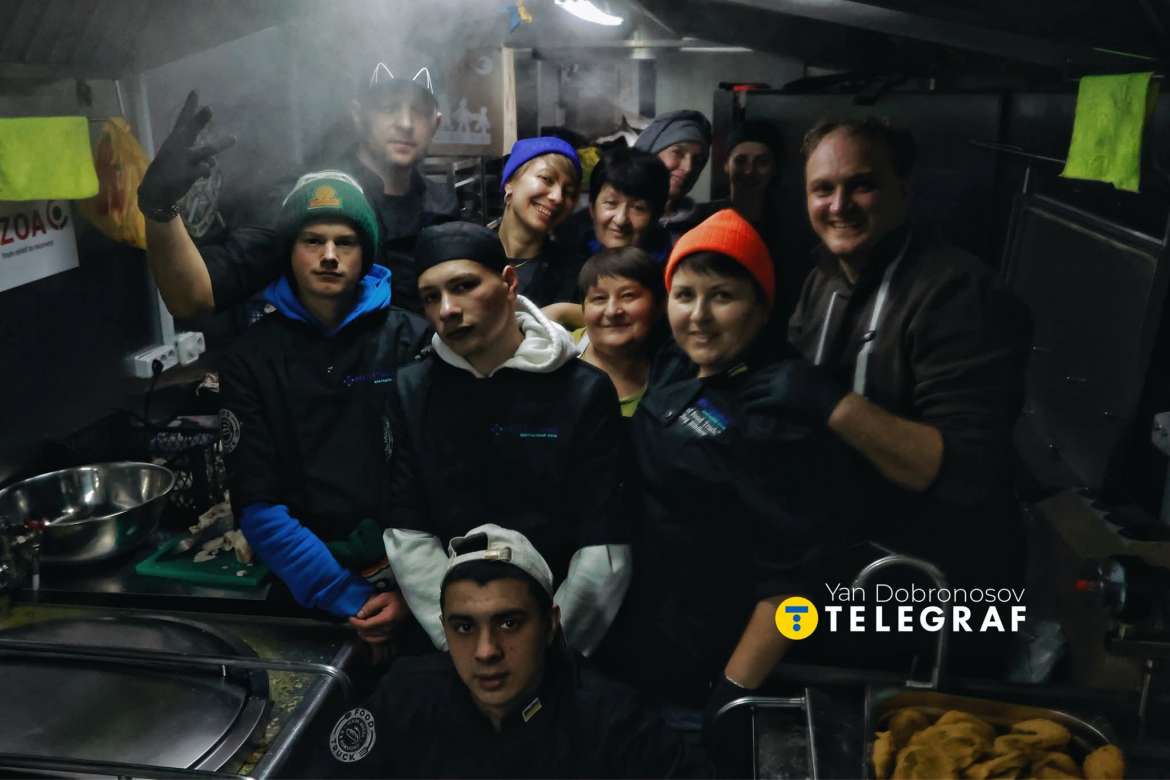
Photo: Yan Dobronosov / Telegraf UA
"During peak days, our schedule is 15 to 18 hours a day. Staying on my feet and making sure my chefs don’t burn out is my top priority as head chef, because a food truck is, first and foremost, about the people who work inside it. Without them, it’s just a hunk of metal that can’t cook anything or go anywhere. It’s vital to me that people understand this. The food truck is the physical embodiment of our mission: "People for People." My team is a unique phenomenon, because such diverse people have come together to form a powerful, effective organism. Our result: over 600,000 servings of hot meals in a year of operation. Given the circumstances in the Kyiv region, that number is growing significantly by the hour. It’s also important for me to talk to the people we help. That’s the best feedback to analyze and improve our work. When the news reports on the extreme living conditions of Kyiv residents, we are living through those exact conditions right alongside them. I remember when it was -20°C outside the food truck, while inside the apartments of the people waiting in line for a hot meal, the temperature was, at best, +15°C at best. Near the food truck, there are several heated tents where people can drink tea, and there’s a play area for children. A whole little town has sprung up around it. When one of our partners visits us, the question of why we’re here never comes up. We’re here because the circumstances of the war prevent Ukrainians from meeting their basic needs—to eat and stay warm. It sounds scary, but instead of being afraid, it’s better to roll up our sleeves and get to work," emphasizes Oleh Bibikov, the food truck’s head chef.
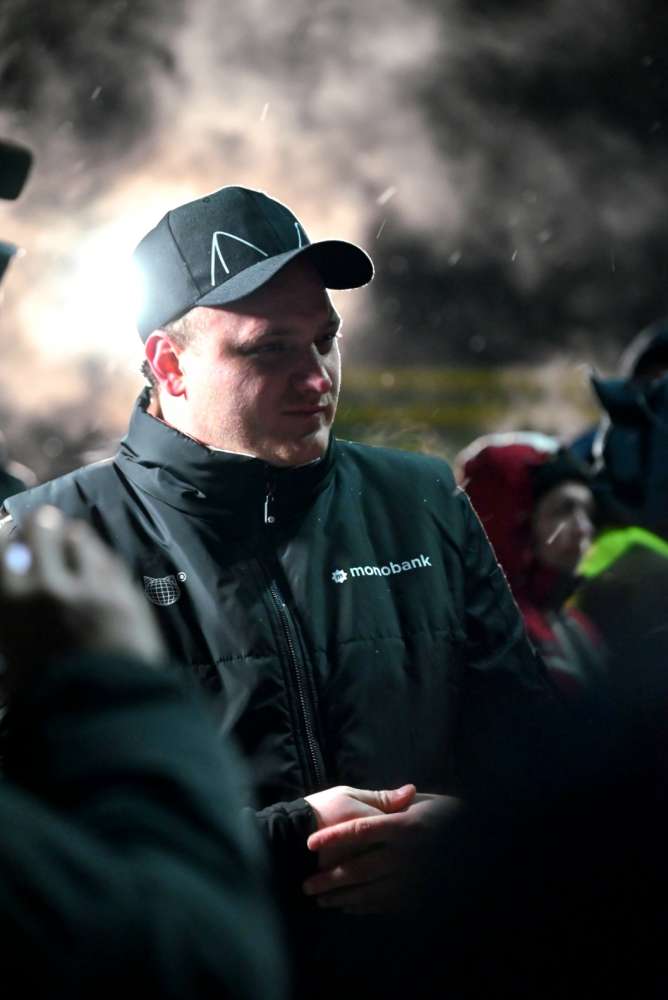
Indeed, the atmosphere around the food truck in Brovary evoked mixed emotions. On the one hand, there was the smooth coordination between the mobile kitchen team and the rescue workers, volunteers, partners, and people in line… On the other hand, there were the freezing high-rises in the Kyiv region, where the heating from generators was turned on for just a couple of hours; the frosty air, steaming with the aroma of borscht simmering over an open fire and the breath of dozens of people gathered around—some to help, others to get a hot dinner.
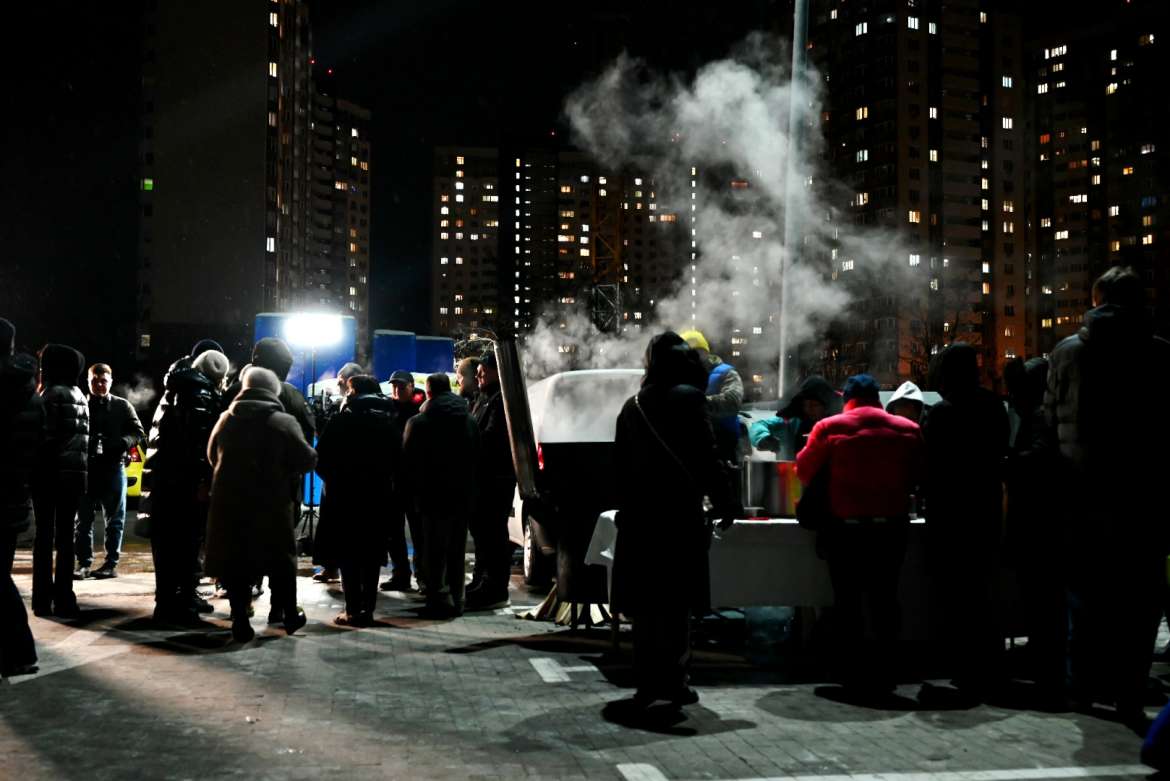
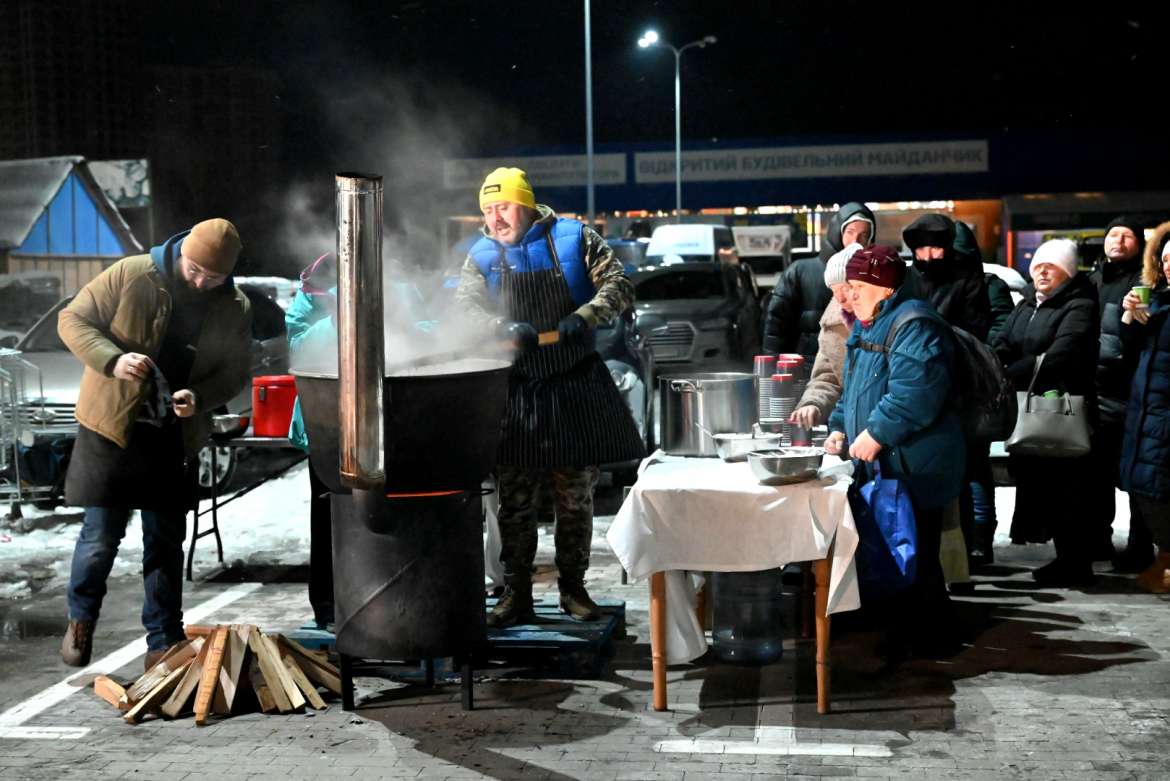
"We had never seen the capital of our country like this before. But what weighed even more heavily on us was the realization that these social consequences were the result of deliberate terror against the civilians. What the enemy calls "military targets" is actually the ability to have warmth in our homes, to cook breakfast for our children, and for the elderly to take walks in the park…When you see all these dark high-rises, it’s hard to imagine how elderly or mobility-impaired people, or mothers with small children, can get anywhere without an elevator. In these conditions, even such a basic issue becomes incredibly difficult to resolve. Given the nature of the Committee’s work, these were the very nuances I considered first and foremost. We realize that there are still many places in Ukraine where such a rapid response to a wartime food crisis would be appropriate, but the food truck team’s resources are limited and must be conserved. However, the successful model presented—covering operational organization, communication with partners, coordinated logistics, and assessment of people’s needs—is worth scaling up, particularly by leveraging the capabilities of communities in distress. Ukrainians have repeatedly demonstrated their resilience and ingenuity, and now is not the time to let our guard down. Therefore, we continue to work on both immediate challenges and sustainable solutions to ensure lasting results in the future," notes Nataliya Kabatsiy, director of the Charitable Organization "Charity Fund "Medical Aid Committee in Zakarpattya".
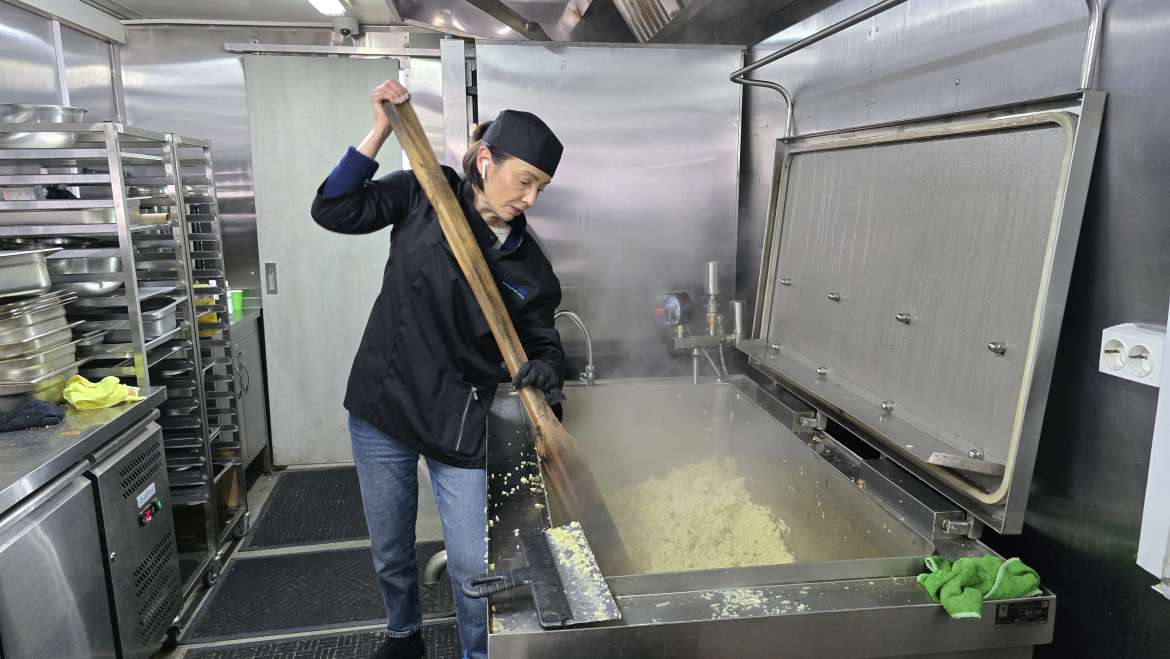
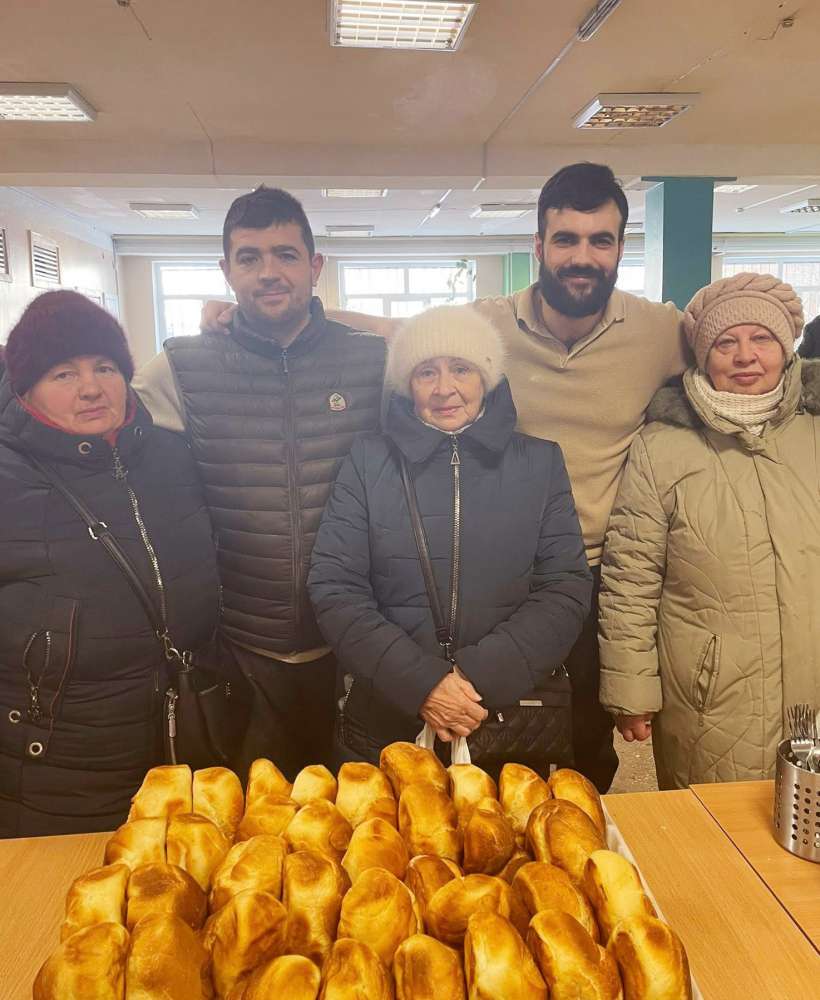
Once again, we see how good deeds bring people together and create invisible networks of help and support. For example, Loïc Nervi, a volunteer from the organization "Bakers Without Borders" (Le boulanger sans frontières), is currently working at the humanitarian kitchen in Troieshchyna. In his mobile bakery, he bakes about a thousand fragrant loaves of bread every day, which complement the hot meals prepared by the team from the NGO "Iskra Dobra." This collaboration is the result of a previous meeting between the Chernihiv-based organization and Jacques Duplessy, a friend of the Committee and coordinator of the French association "Comité d’aide médicale Ukraine." This food relief mission is further empowered by two heavy-duty generators provided by CAMZ on behalf of Comité d'aide médicale Ukraine and the Association SAFE—the latter of which also donated a minibus to the volunteers a year ago to streamline logistics. The kitchen is equipped with a food-cooking boiler and a freezer table, which the Committee received from the Association "Network Switzerland - Transcarpathia / Ukraine" (NeSTU). The Medical Aid Committee in Zakarpattya has repeatedly secured funding from its partners—the Swiss associations NeSTU, Parasolka, and the "NAK-Humanitas" Charitable Foundation—to support the food truck’s operations.
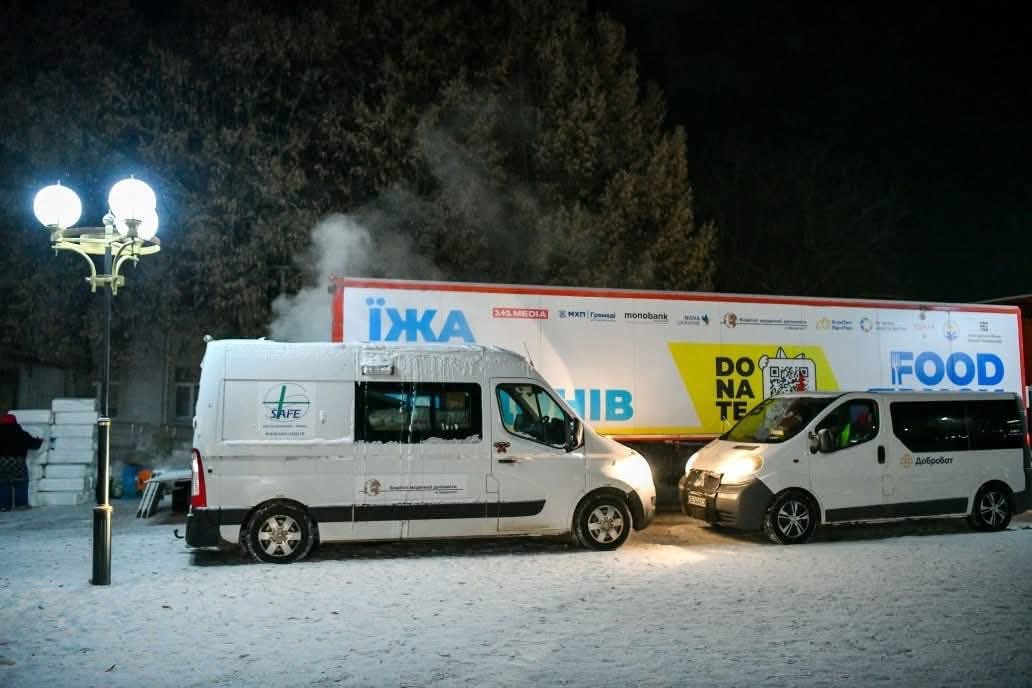
At the time of this publication, nearly 2,600 buildings in the capital were still without heat as a result of the enemy’s massive attack on Kyiv. This means that the mission of "FoodTruck: Food Without Borders" is becoming even more relevant in its place of operation.
Currently, the project's support consortium brings together 1+1 media, CAMZ, the Ukrainian Food Banks Federation, the Charitable Foundation "MHP-Hromadi", Monobank, Biosphere Corporation, the NGO "Life Quality" Fund, Agrotep LLC, ISAIA Ukraine, the Yevgen Pyvovarov’s Charity Fund, the "Dobrobat" Volunteer Construction Battalion, and other patrons.